The elements of a Chinese garden
A classical garden is a landscape painting you can walk into. Once you know its elements, you start to see how each view was composed.
Mountains and water
The Chinese word for landscape is shānshuǐ, "mountains and water", and every garden pairs the two. Rocks stand for mountains, hard and still; water is soft and moving and reflects the sky. Together they echo the balance of yin and yang.
Rocks
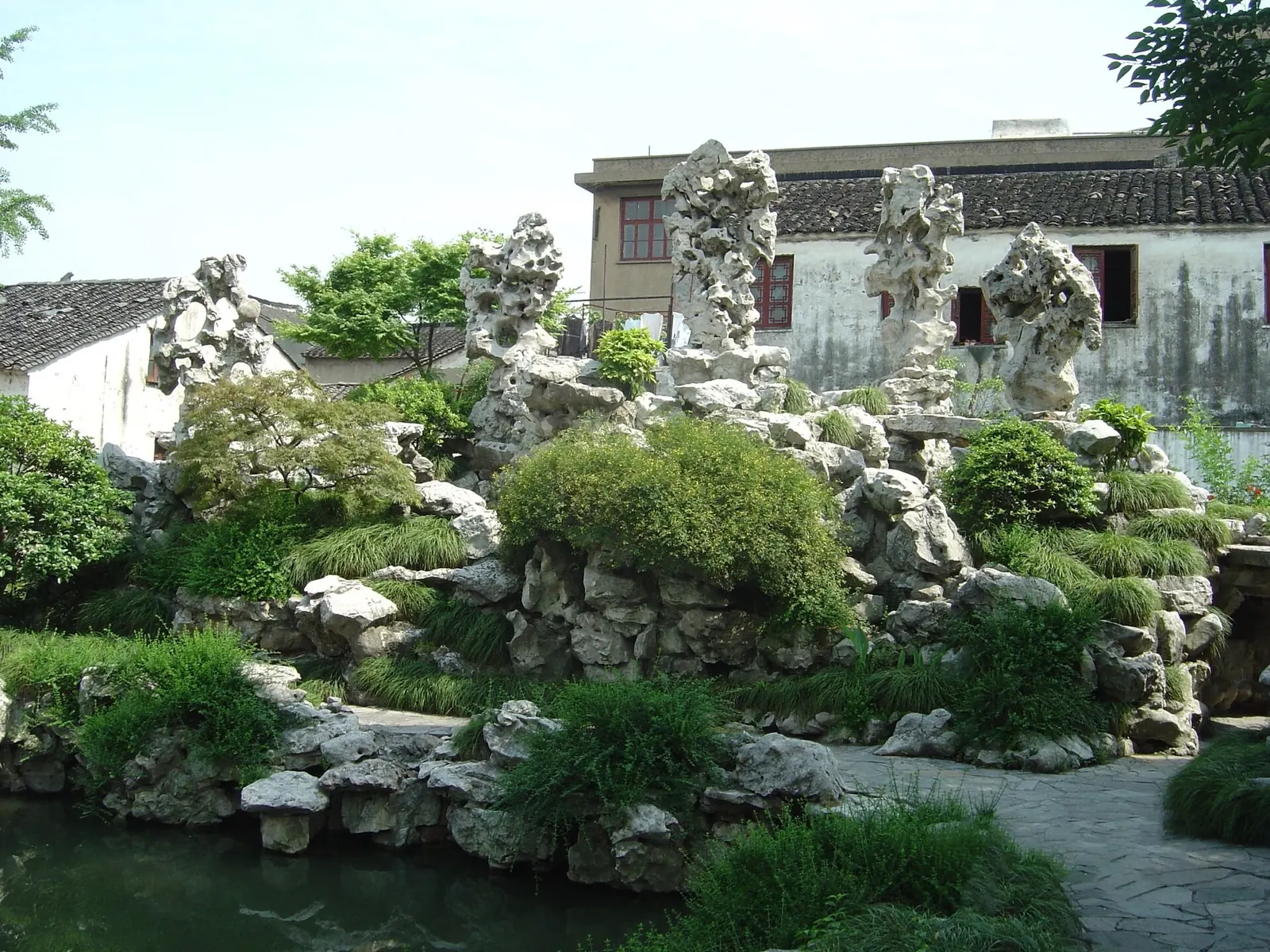
The most prized garden rocks are Taihu stones: limestone shaped by water into holes, hollows and ridges, judged by being "thin, open, leaky and wrinkled". Single rocks are displayed like sculptures; piles of rock form artificial mountains with caves and paths.
Buildings
Buildings take up a large part of a scholar's garden and have specific roles: halls (tang) for receiving guests, studios and libraries, pavilions (ting) for resting at a viewpoint, waterside pavilions (xie), two-storey towers (lou) and covered corridors (lang) linking them. Each carries a name board and couplets, often quoting poetry, that tell you how to see the view.
Framed and borrowed views
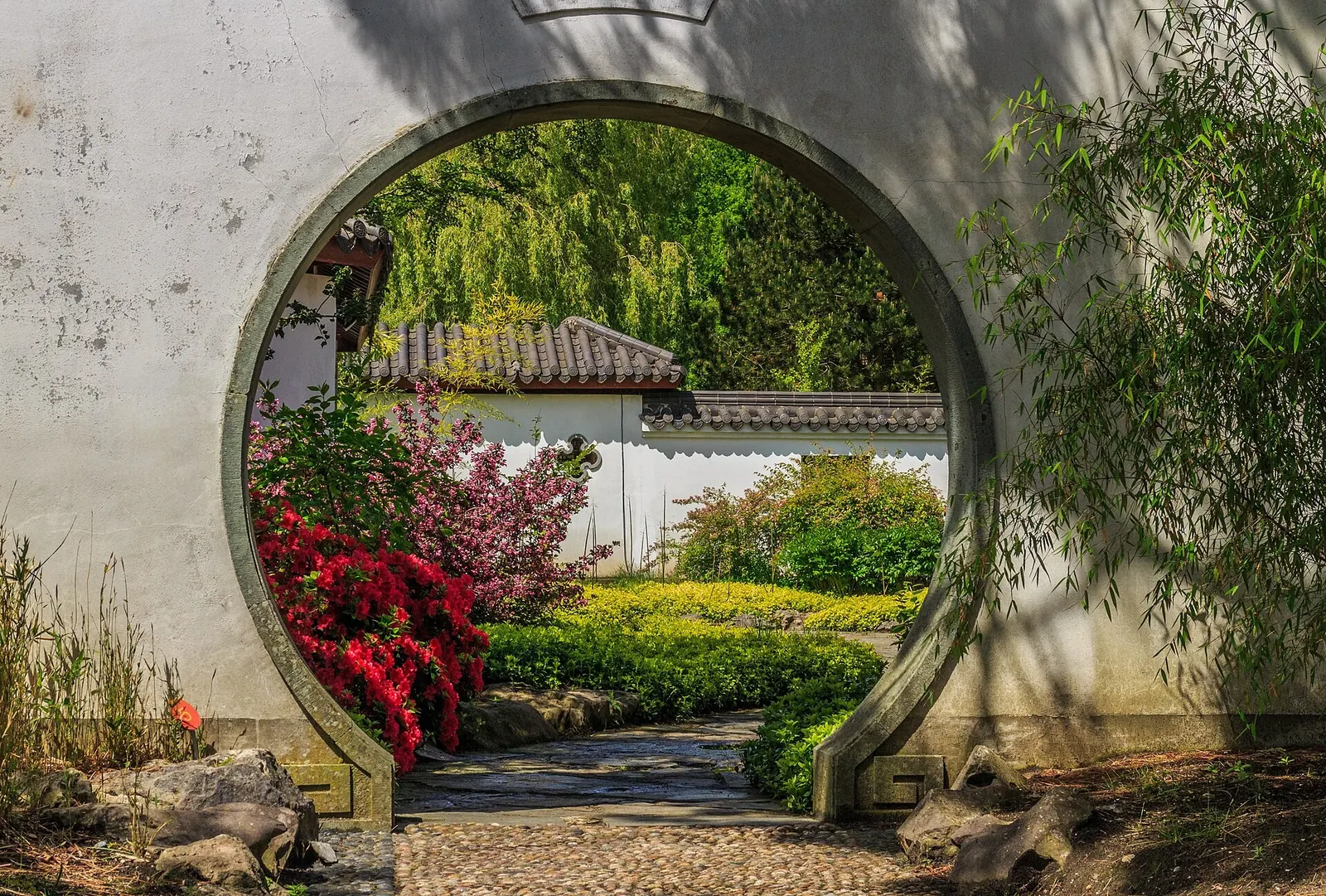
- Framed views (kuangjing): doors and windows act as picture frames.
- Leak windows (louchuang): lattice windows in a wall that half reveal the space beyond.
- Borrowed scenery (jiejing): a distant pagoda or hill outside the walls is made part of the composition.
- Concealment: a rock or wall right inside the entrance hides the garden so that it can be discovered gradually.

Gates and paths
Doorways come in many shapes: full moons, vases, leaves, gourds. Paths are paved with pebble mosaics in patterns of flowers, cranes, coins or bats (a symbol of good fortune), and they wind, so that the walk is longer and the view keeps changing: "a different scene at every step".
Poetry and painting
Garden owners were scholar-officials trained in literature and art. Many gardens were designed with painters, and named views refer to poems everyone of their class knew by heart. A garden was a place to retire from public life, cultivate oneself and entertain friends.