The Lingering Garden
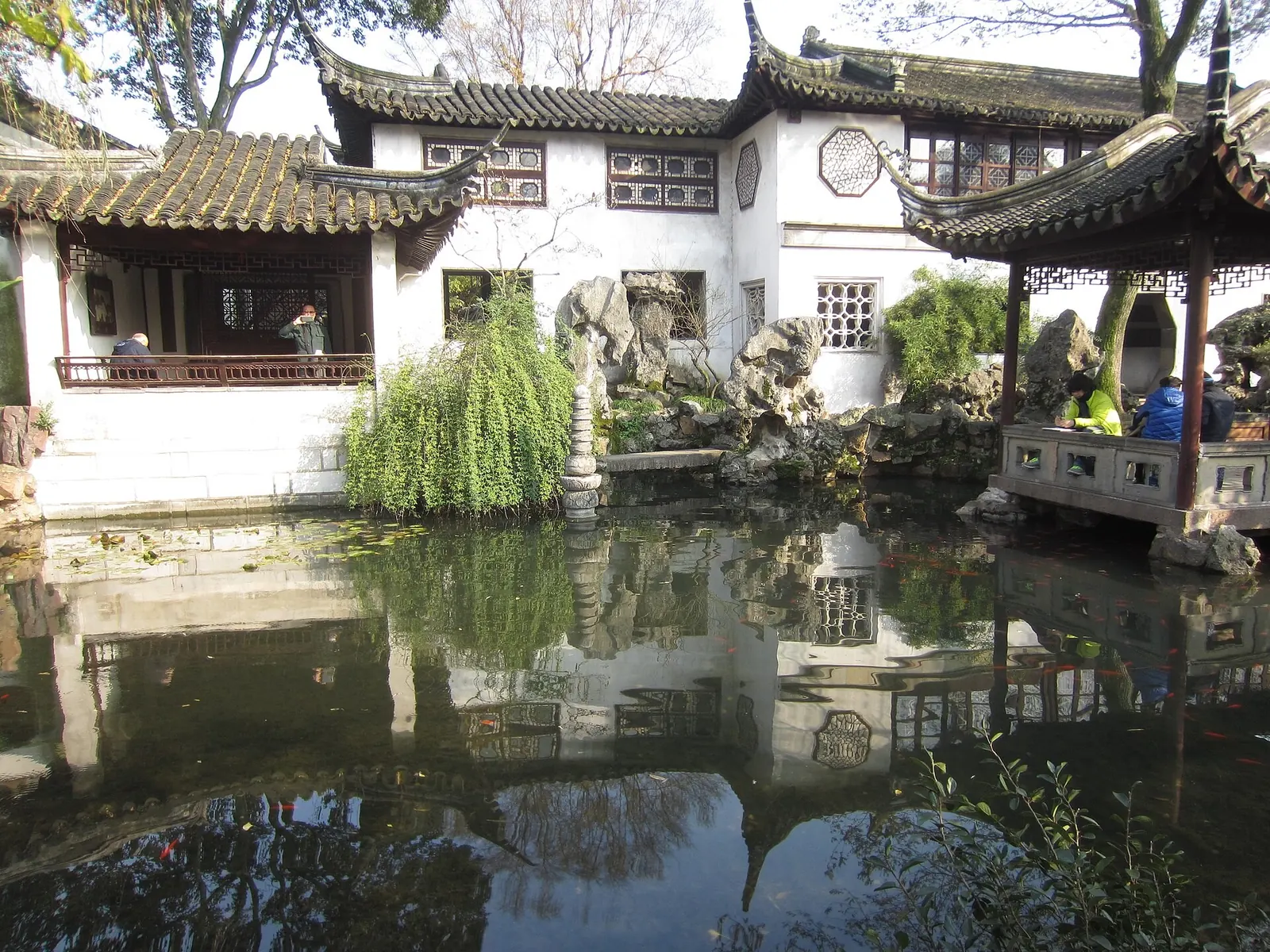
Liú Yuán (留园) is famous for its architecture: a sequence of courtyards, halls and corridors that opens and closes like a story.
History
The garden began in the late 16th century as the East Garden of Xu Taishi, a Ming official. In the late 19th century the official Sheng Kang bought and enlarged it, and the name Liu Yuan ("garden to linger in") came into use. It suffered badly in the 20th century and was restored from the 1950s. It is one of the UNESCO-listed Classical Gardens of Suzhou.
The Cloud-Capped Peak
The garden's most famous object is Guanyun Feng, the Cloud-Capped Peak: a single Taihu limestone rock about 6.5 metres high, among the tallest garden rocks in the region. Such rocks were admired for being "thin, open, leaky and wrinkled", and this one stands in its own courtyard facing a hall from which to contemplate it.
The corridors
About 700 metres of covered corridors link the garden's parts. Their walls carry hundreds of stone tablets of calligraphy, and dozens of lattice windows, each with a different pattern, offer glimpses into the next space. Walking from the dark, narrow entrance passage into the bright central garden is a deliberate effect: compression and then release.
Four parts
The central part has the pond and hills; the east, halls and rock courtyards; the north, a more rural area with bonsai (penjing) collections; and the west, a wooded hill that is especially beautiful with autumn colours.
Visiting
The Lingering Garden is less crowded than the Humble Administrator's Garden and is a good choice for people interested in architecture. Allow one and a half to two hours.