The Master of the Nets Garden
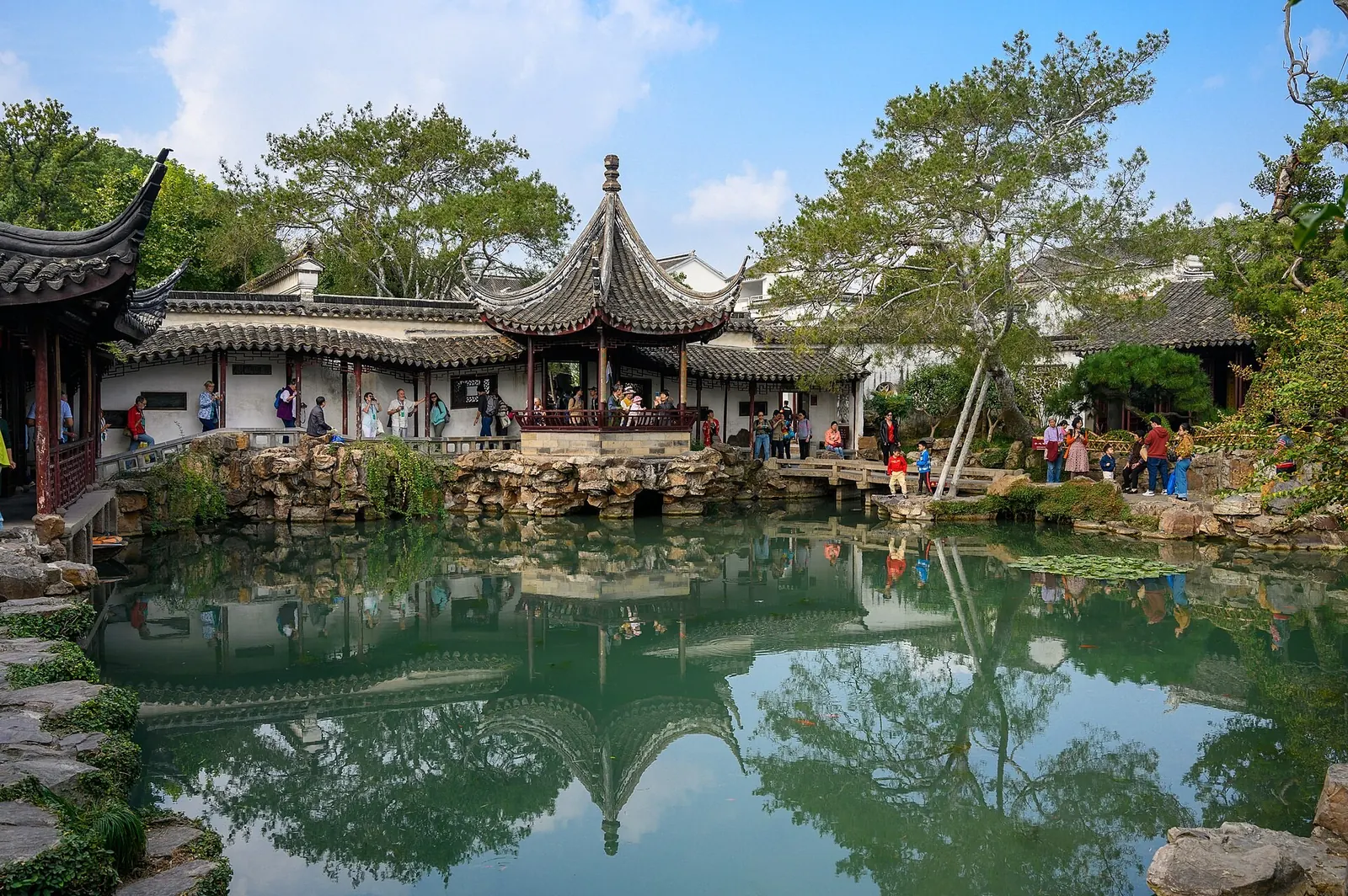
Wǎngshī Yuán (网师园) is small, about half a hectare, but it is often called the most perfect of all Chinese gardens.
The name
A 12th-century official, Shi Zhengzhi, built a garden on this site called the Fisherman's Retreat. In the 18th century another retired official, Song Zongyuan, rebuilt it and named it after the "master of the nets": the fisherman, a classic symbol in Chinese poetry of a simple life away from politics.
A lesson in scale
Everything is sized to make a small space feel large. The central pond is surrounded by buildings that are kept low on the near side; the pond's edges disappear into coves under rocks so you can't see where the water ends; and paths are arranged so that you never see the whole garden at once.
What to look for
- The Late Spring Studio (Dianchun Yi), a small courtyard and study with peony beds.
- The Moon Comes with Breeze Pavilion on the west side of the pond, for moon viewing.
- The tiny bridge that crosses the pond's southeast inlet: it is barely a step long, yet makes the water seem to continue far beyond.
The garden in New York
In 1980–81 craftsmen from Suzhou built the Astor Court in the Metropolitan Museum of Art in New York, modelled on the Late Spring Studio courtyard. It was one of the first long-term cultural exchanges between China and the United States after 1979. See Chinese gardens outside China.
Visiting
The garden is small and can feel crowded at midday; mornings are best. In summer there have often been evening opening hours with traditional music performances in the halls. Allow an hour.