The Summer Palace, Beijing
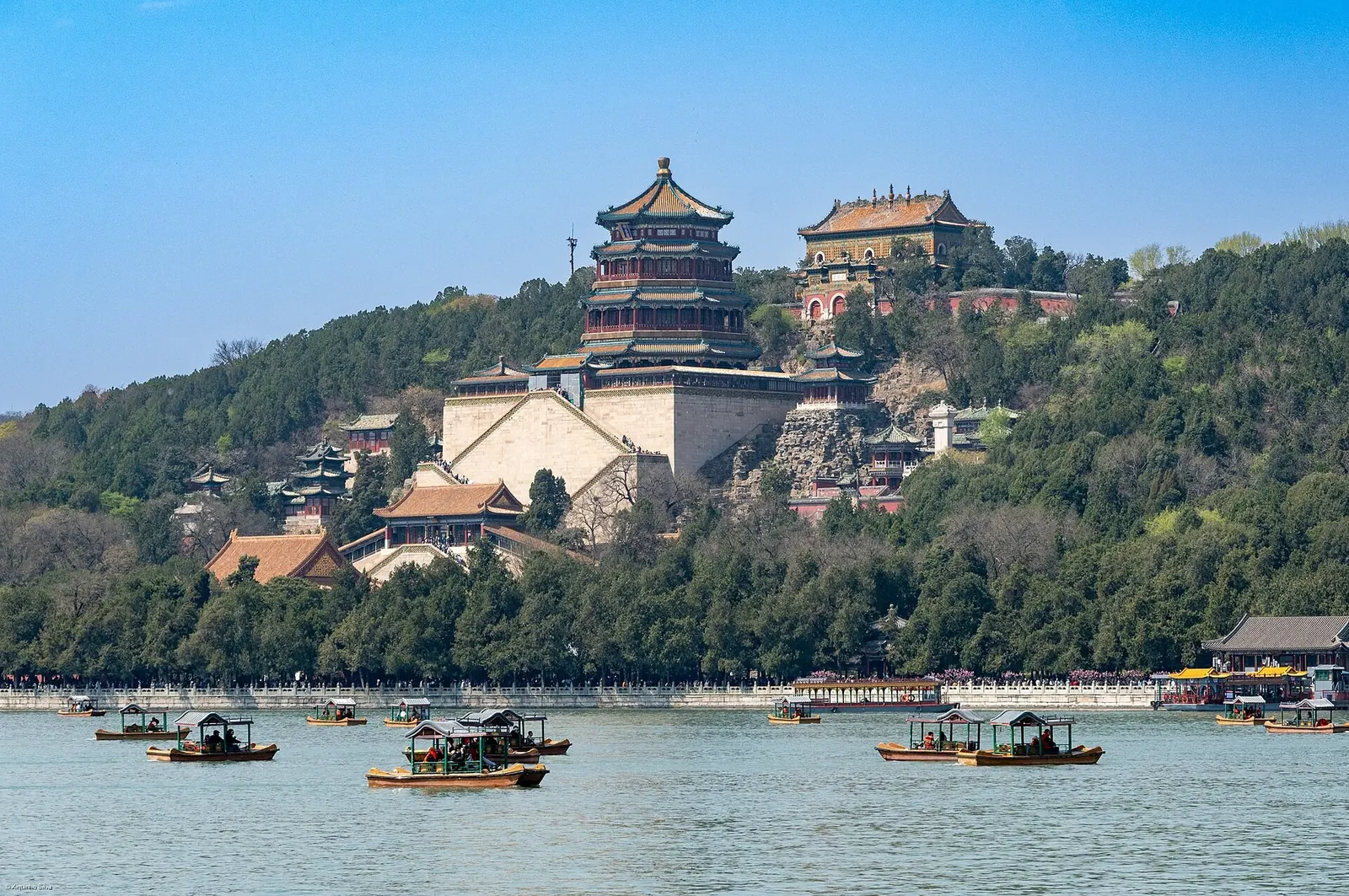
Yíhé Yuán (颐和园) is the opposite of a Suzhou garden in scale: a lake of over two square kilometres and a hill covered in temples. Yet it uses the same ideas.
History
Emperor Qianlong created the Garden of Clear Ripples here in 1750, enlarging the lake and shaping Longevity Hill. Anglo-French troops destroyed it in 1860, during the Second Opium War, along with the nearby Old Summer Palace (Yuanmingyuan). Empress Dowager Cixi rebuilt it in the 1880s under the name Yiheyuan, "Garden of Preserved Harmony", famously using funds intended for the navy. It became a public park in 1924 and a UNESCO World Heritage Site in 1998.
What to look for
- Kunming Lake and the West Causeway, modelled on the West Lake in Hangzhou.
- The Long Corridor, about 728 metres long, with thousands of painted scenes from literature, history and landscapes on its beams.
- The Tower of Buddhist Incense on Longevity Hill, the garden's landmark.
- The Marble Boat, a stone pavilion in the shape of a boat.
- Suzhou Street behind the hill, a copy of a Suzhou canal street built for the emperors' amusement.
- The Garden of Harmonious Interests, a garden-within-a-garden modelled on the Jichang Garden in Wuxi.
Visiting
Allow at least half a day. The park is huge, so decide on a route: for example, the Long Corridor and Longevity Hill, then a boat across the lake to the Seventeen-Arch Bridge. In winter the lake freezes and the crowds thin out. Combine with the ruins of the Old Summer Palace nearby.