The Humble Administrator's Garden
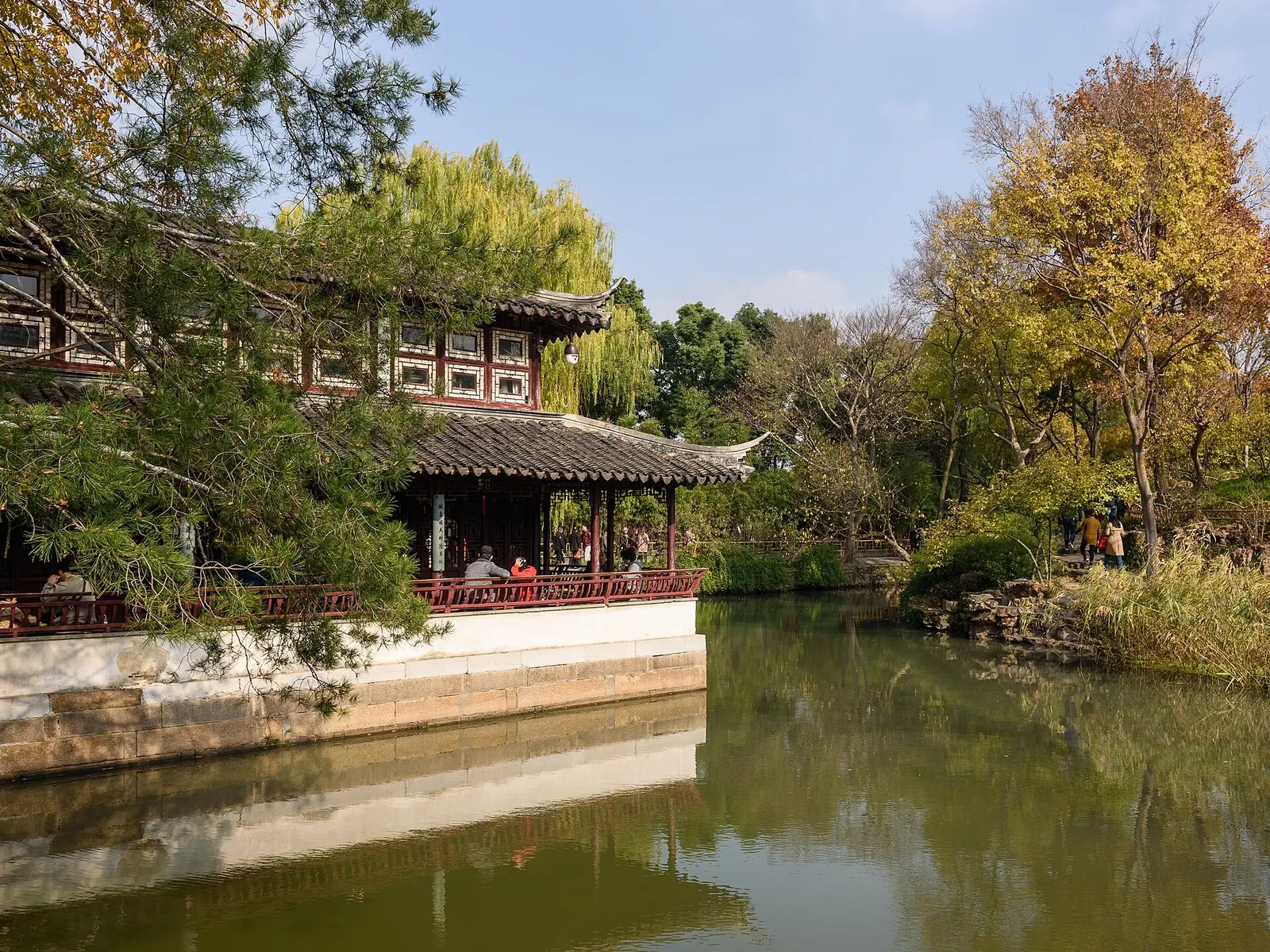
Zhuōzhèng Yuán (拙政园), the largest of Suzhou's classical gardens, is built around water: more than a third of its area is ponds and streams.
History
The garden was laid out in the early 16th century by Wang Xianchen, a court official who retired to Suzhou after a disappointing career. He took its name from a line by the Jin-dynasty writer Pan Yue about how growing vegetables and running a household is "the administration of a humble man": a wry comment on his own fortunes. The painter Wen Zhengming, a friend, made a famous album of paintings of the garden in 1533.
Over the centuries the garden was divided, sold, neglected and rebuilt many times. It was restored as a single public garden in the 20th century and listed by UNESCO, with the other Classical Gardens of Suzhou, in 1997.
The three parts
- East: open lawns and woods, largely rebuilt in the 1950s; the entrance is here.
- Central: the heart of the garden and the most celebrated scenery. The Hall of Distant Fragrance (Yuanxiang Tang), named after the scent of lotus carried across the water, looks out over the main pond and its two wooded islands.
- West: a more intricate part with a winding covered walkway built out over the water, and the Hall of Thirty-Six Mandarin Ducks.
What to look for
- Borrowed scenery: from the western edge of the central pond, the pagoda of the North Temple outside the walls appears to be part of the garden.
- Framed views: doorways and windows are placed so that every step reveals a composed picture. See the elements of a Chinese garden.
- Lotus fills the ponds in July and August. See plants of the Chinese garden.
Visiting
This is the busiest garden in Suzhou. Book tickets in advance in high season and arrive at opening time, or come late in the afternoon. Allow at least two hours. The Suzhou Museum, designed by I. M. Pei, is next door. More tips: visiting the Suzhou gardens.