The Lion Grove Garden
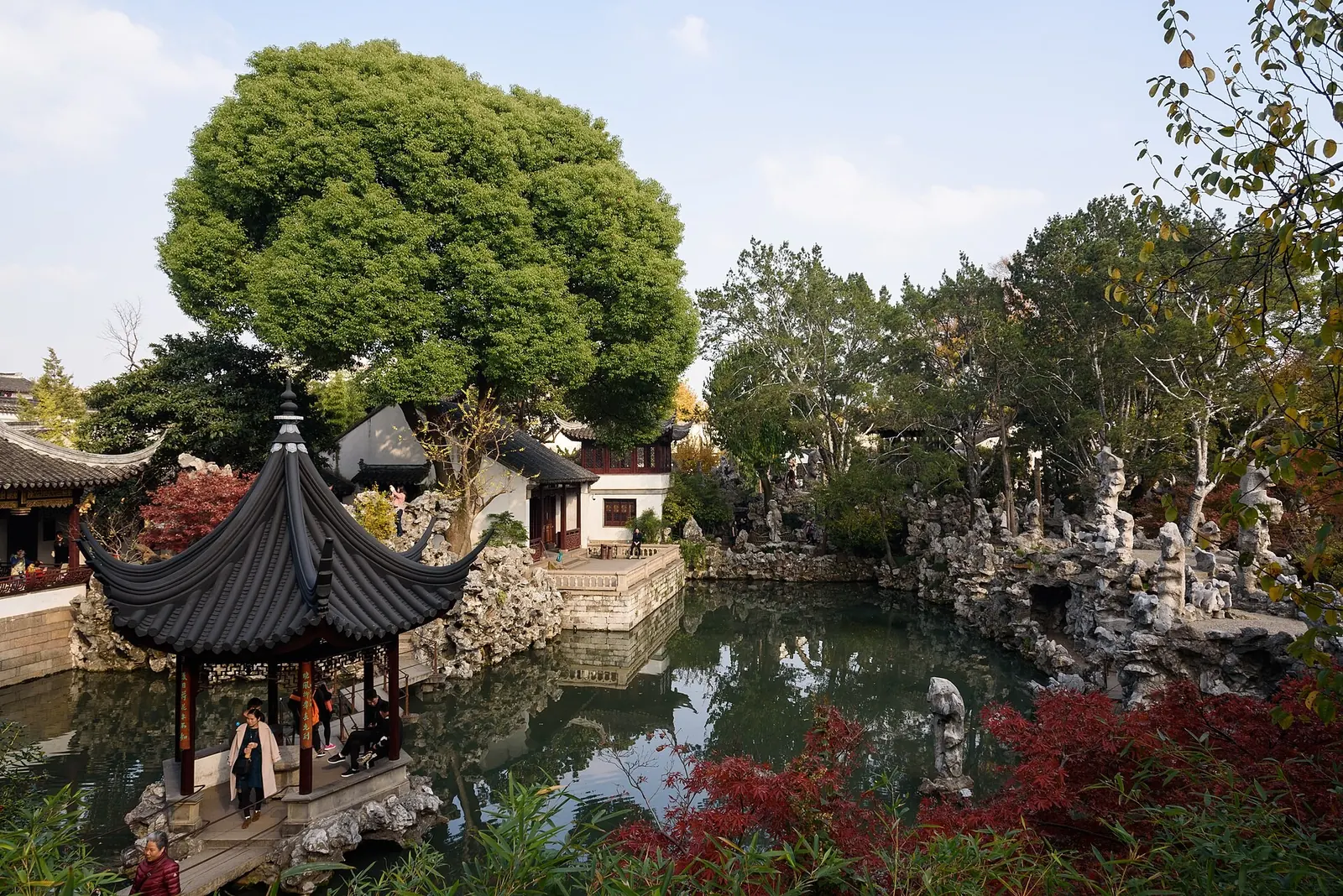
Shīzi Lín (狮子林) is famous for one thing above all: the largest and most labyrinthine rockery of any classical garden.
History
The garden was founded in 1342, during the Yuan dynasty, by the Buddhist monk Tianru in memory of his teacher. The name refers both to rocks that look like lions and to the "lion's roar", a Buddhist image for the Buddha's teaching. Later it passed through private hands; in the early 20th century it was bought by the Bei family, relatives of the architect I. M. Pei.
The rock maze
The rockery is built from Taihu limestone, the porous, eroded stone dredged from Lake Tai west of Suzhou. Paths climb, descend and twist through caves and over ridges, and it's easy to get lost. Look for rocks that resemble lions: children make a game of counting them. Emperors Kangxi and Qianlong both visited, and Qianlong had copies of the garden built in his imperial gardens.
Beyond the rocks
- The Pavilion of True Delight, named from an inscription by Emperor Qianlong.
- A boat-shaped stone pavilion and an artificial waterfall on the west side.
- Windows in the corridor walls that frame views of the four scholarly pursuits: zither, chess, calligraphy and painting.
Visiting
The garden is a short walk from the Humble Administrator's Garden and Suzhou Museum, so the three fit into one day. Wear comfortable shoes for the rockery. Allow about an hour.